
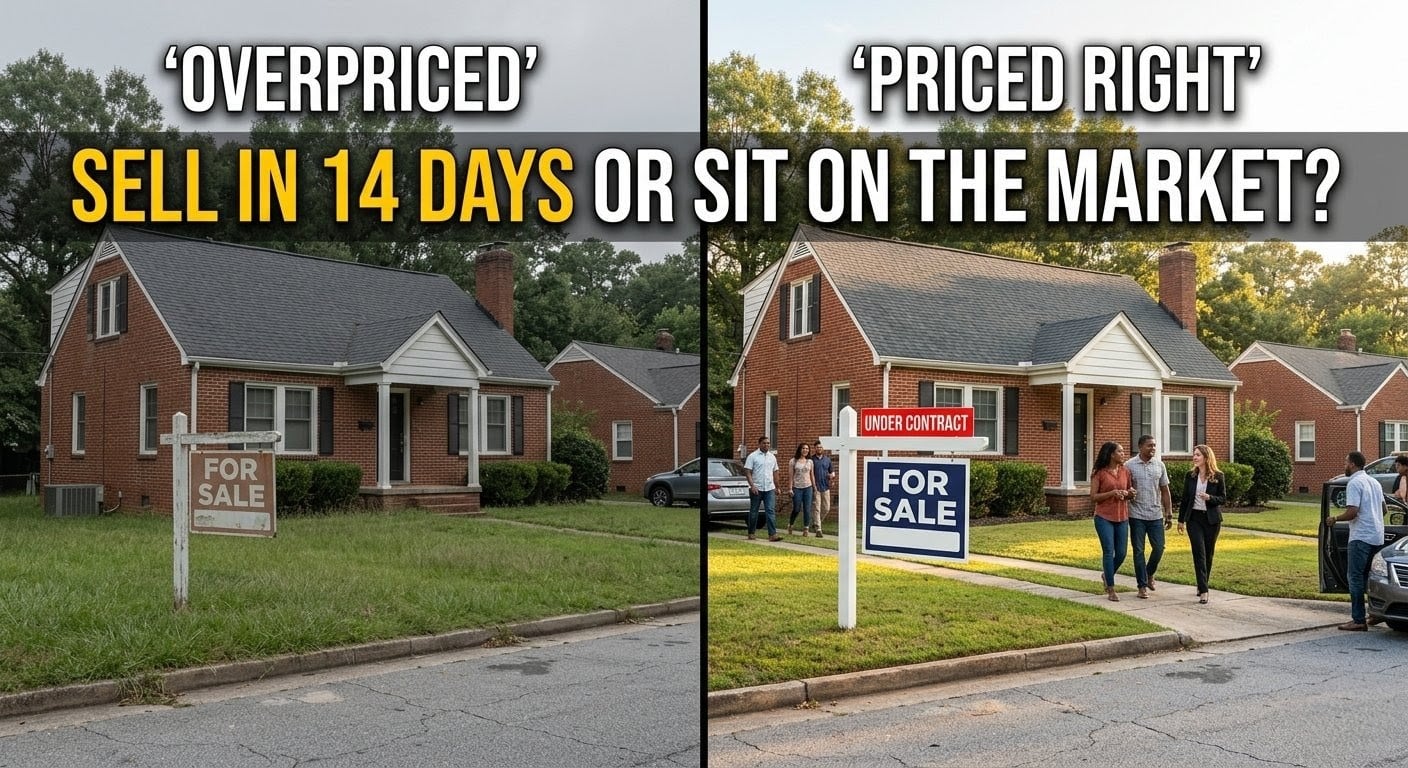
Choosing the wrong price for your Atlanta home can cost you months of stress and thousands of dollars in carrying costs. Most sellers face this same fear — setting a price too high means watching your home sit empty while neighbors sell around you, but pricing too low feels like leaving money on the table. The truth is that selling quickly in Atlanta isn't about luck or hoping the right buyer shows up. It's about using local market data and a clear pricing strategy that respects what buyers are actually willing to pay. The first 14 days after your listing goes live matter more than most sellers realize, especially when the average Atlanta home now sits on the market for 50 to 75 days while buyers compare more options than ever before. With Atlanta's median listing price hovering around $359,900, softening prices, and rising inventory giving buyers room to be selective, your pricing decision carries serious weight. This article will walk you through the specific steps to price your home using recent sold homes, active competition, pending sales, and neighborhood trends that actually influence Metro Atlanta buyers. You'll learn how to identify the price bands that create urgency instead of silence, and why speed is a strategy you can control rather than something you hope for. What if the difference between a quick sale and a stale listing comes down to understanding exactly what your local market data is telling you?
Start at the number buyers will actually visit
Setting your home's asking price at or just beneath actual market worth generates immediate interest and compels serious purchasers to schedule viewings within hours of your listing going live. Metro Atlanta buyers conduct their initial property evaluations based entirely on the number they see online, making this decision more critical than any staging or marketing effort you might invest in later.
Market reality shows pricing discipline matters
Current Atlanta sales data reveals homes are closing at a 0.979 median sale-to-list ratio, which means properties typically sell for roughly 2 percent below their original asking price. This figure demonstrates that buyers maintain significant negotiating power and rarely pay full asking price, let alone compete in bidding wars that drive prices higher. Sellers who ignore this trend and list above fair market value often watch their homes languish for months while correctly-priced properties in the same neighborhood receive multiple offers and close quickly. The mathematics are straightforward — overpricing your home by even 5 percent can extend your time on market by weeks or months, costing you more in carrying costs than any potential price premium you might have hoped to achieve.
Buyer behavior reveals immediate judgment patterns
Only 15.8 percent of Atlanta homes sell above their listed price, which means the vast majority of transactions occur at or below asking price regardless of property condition or location desirability. Buyers form their value assessments within seconds of seeing your listing price, and they rarely revisit properties they initially dismissed as overpriced, even if you reduce the price later. When purchasers browse online listings, they filter by price range first, then evaluate photos and details second — meaning an inflated asking price removes your home from consideration before buyers ever see its best features. Modern buyers research comparable sales extensively before making offers, so they arrive at showings with clear expectations about what your home should cost based on recent neighborhood transactions.
Positioning your home at a competitive price point creates the perception of value that motivates buyers to act swiftly rather than continue shopping for alternatives. Smart pricing doesn't mean accepting less money for your property — it means understanding that buyers will pay fair market value quickly when they believe they've found a good deal, but they'll walk away from homes that feel overpriced regardless of their actual worth.
Why the first 14 days matter most
Fresh listings command the highest level of scrutiny from every participant in the real estate ecosystem — buyers configure their search alerts to notify them instantly when new properties enter their price range, real estate agents prioritize showing recently listed homes to active clients, and automated systems across major platforms like Zillow and Realtor.com push new inventory to the top of search results. This two-week window represents your property's peak visibility period when the largest pool of qualified buyers will encounter your home for the first time.
The real estate market operates on a psychological principle where newer listings automatically receive more credibility and interest than properties that have lingered on the market. Here's how this timing affects your sale:
- New listings capture immediate buyer attention while older listings fade into background noise. MLS systems and real estate websites algorithmically favor recently added properties, ensuring maximum exposure during your launch period. Buyers actively searching for homes develop "listing fatigue" when they see the same properties appearing in their searches week after week, causing them to mentally dismiss homes that have been available for extended periods. Priced right, homes sell in approximately 30 days according to recent Atlanta market data, while properties that miss their initial pricing window often require significant price reductions to regain buyer interest.
- Well-positioned homes generate multiple showing requests within 48 hours of going live, while overpriced properties watch their strongest buyer pool disappear before sellers recognize the pricing error. Buyers who receive instant notifications about new listings in their target neighborhoods act quickly when they perceive value, often scheduling viewings the same day a property becomes available. Conversely, homes that debut above market value lose these motivated early buyers permanently — these purchasers move forward with other properties rather than waiting to see if overpriced homes will eventually reduce their asking prices.
- Atlanta's current market conditions amplify the importance of early momentum because buyers face an abundance of choices with more than 4,000 active listings competing for their attention. Value-conscious purchasers can afford to be selective when inventory levels provide numerous alternatives within their preferred neighborhoods and price ranges. When a listing feels overpriced relative to comparable properties, buyers simply continue their search rather than negotiate on homes that appear to lack realistic pricing from the start.
Achieving rapid sales requires strategic preparation and precise market positioning rather than wishful thinking about future price appreciation. Sellers who respect current market conditions and price their homes based on recent comparable sales data create the urgency that motivates buyers to act decisively during those critical first two weeks.
Use sold homes active listings and pendings together
Three distinct data sources form the foundation of accurate home valuation when combined systematically rather than relying on isolated comparable sales or simplified square footage calculations. This comprehensive approach reveals the complete market picture through information that each data type provides about buyer behavior and current conditions.
Sold homes
Closed transactions represent the most reliable evidence of what purchasers actually exchanged money for under real market conditions. These completed sales demonstrate the final negotiated amounts that buyers and sellers agreed upon after inspections, appraisals, and financing contingencies were satisfied. Recent sales of homes that are as much like yours as possible are the best indicator of what your house is worth, providing concrete proof of value rather than theoretical estimates. Examining these transactions within your immediate neighborhood shows the price ranges where deals actually occurred, not where sellers hoped they would occur.
Active listings
Current inventory on the market reveals the direct competition your home faces when buyers compare available options within their search parameters. These properties represent what purchasers can choose instead of your home, making their pricing strategies and features critical factors in your own positioning decisions. Active listings show competition but don't reflect what buyers are paying, since asking prices often exceed final sale amounts. Studying these competing properties helps identify how to differentiate your home and where to position your price relative to similar offerings that buyers are currently evaluating.
Pending sales
Properties under contract provide the most current snapshot of where buyer demand is settling in real-time market conditions. Pending sales indicate current demand and what buyers are willing to offer right now, bridging the gap between past closed transactions and future market trends. These agreements reflect the most recent buyer behavior and price acceptance levels, showing how market conditions may have shifted since the last comparable sales closed. Pending transactions often signal whether prices are moving upward, downward, or remaining stable compared to recent closed sales.
Square footage alone fails to capture the nuanced factors that drive buyer decisions and property values in specific neighborhoods. Avoid over-relying on price per square foot because it ignores differences in quality, condition, and features that significantly impact what purchasers will pay. Two homes with identical square footage can command vastly different prices based on layout efficiency, natural light, storage space, outdoor areas, and interior finishes.
Meaningful comparisons require matching properties on multiple characteristics beyond size — construction era, architectural style, lot dimensions, renovation status, school district access, and neighborhood character all influence buyer preferences. Prioritize the most recent comps—within the last 3-6 months—for accurate pricing in today's market, especially when inventory levels and buyer behavior are shifting. Older sales data becomes less relevant as market conditions evolve, potentially leading sellers to price based on outdated information that no longer reflects current buyer willingness to pay.
Selecting the most credible price range means focusing on defensible comparisons rather than seeking the highest possible valuation from outlier sales that may not represent typical market conditions.
Price for your neighborhood not for Atlanta as a whole
Metro Atlanta operates as dozens of distinct housing submarkets rather than a single unified real estate zone, where each community maintains its own buyer preferences, inventory levels, and price tolerance that can vary dramatically from citywide statistics. Relying on broad metropolitan averages when setting your asking price ignores the hyperlocal factors that actually drive purchase decisions in your specific zip code or subdivision. "The more useful story for buyers is how much Atlanta varies by area" — a reality that sellers must respect when determining where to position their home relative to immediate competition.
Your pricing strategy should account for the specific demographics, school ratings, commute patterns, and lifestyle amenities that attract buyers to your particular neighborhood rather than assuming all Atlanta areas perform identically. Purchasers often limit their searches to specific geographic zones based on work locations, family needs, or community preferences, meaning your true competition consists of homes within a much smaller radius than the entire metro area. Recent local data demonstrates this variation clearly, with Midtown around $369,900, Old Fourth Ward around $345,950, and Westside around $326,500 on median listing price, while Buckhead commands approximately $632,500 and Decatur reaches $696,000.
Different Atlanta submarkets require distinct pricing approaches based on their unique market dynamics and buyer expectations:
Targeting your pricing to neighborhood-specific conditions demonstrates market awareness that builds immediate credibility with both buyers and their agents. "In other words, 'Atlanta' is not one price. It is a mix of very different entry points depending on the kind of home and location you want." Establishing your asking price based on hyperlocal data rather than regional averages signals that you understand current market realities and have positioned your home competitively within its actual competitive set.
Adjust for condition upgrades and repair reality
Property condition stands as one of the most decisive factors influencing what Atlanta purchasers will pay, with buyers consistently demonstrating their willingness to pay premium amounts for homes that require no immediate work or improvements. "A home's condition plays a significant role in how it's priced—and how quickly it sells," reflecting the serious financial implications that physical state has on both final sale amounts and market timing. Buyers evaluate risk and convenience when making offers, which means homes presenting themselves as turnkey solutions command respect in the form of higher accepted offers and faster contract negotiations.
Premium positioning for turnkey properties
Renovated kitchens, updated bathrooms, fresh interior paint, and functioning HVAC systems create immediate buyer confidence that translates directly into stronger offers and reduced negotiation pressure. "Move-in ready homes with recent updates often sell faster and for higher prices" because purchasers recognize the value of avoiding construction delays, contractor coordination, and budget uncertainty that comes with fixer-upper properties. Modern finishes such as granite countertops, hardwood floors, and energy-efficient appliances signal to buyers that major systems have been maintained and upgraded according to current standards.
Well-maintained homes also benefit from reduced buyer skepticism during the inspection process, since purchasers feel more confident that hidden problems are less likely to surface after closing. Properties with visible updates and quality maintenance records allow sellers to justify asking prices at or above recent comparable sales because buyers perceive lower ownership risk and immediate livability.
Accounting for repair costs and buyer psychology
Homes requiring noticeable work face automatic price reductions in buyer minds as purchasers calculate repair expenses, timeline disruptions, and potential complications that come with renovation projects. "Buyers are willing to pay a premium for homes that require minimal work," which means properties needing updates must be positioned significantly below move-in-ready alternatives to generate equivalent buyer interest. Properties requiring major updates may sell for 10-20% less than comparable renovated homes, establishing a clear benchmark for sellers to use when evaluating their pricing strategy.
Structural concerns, outdated electrical systems, aging roofs, or cosmetic issues like worn carpeting and outdated fixtures create buyer anxiety about unknown costs and project scope that extends beyond the visible problems. Purchasers mentally subtract estimated repair costs from their maximum offer amounts, then add additional discounts to account for the inconvenience and risk of managing improvement projects while living in the property.
Pricing homes based on their current physical state rather than their potential after improvements respects buyer psychology and market realities that determine actual transaction amounts. Realistic pricing helps imperfect homes sell faster because it acknowledges the extra effort and expense that buyers must invest to bring properties up to their preferred standards.
Stay out of the stale listing zone
Overpriced homes lose their competitive edge within days of entering the market as fresh inventory arrives with more realistic asking amounts that immediately capture buyer attention and showing requests. Each week that passes without meaningful interest allows newly listed properties to overshadow your home, creating a cycle where motivated purchasers focus their energy on recently added options rather than revisiting homes they initially dismissed as overvalued. The real estate market operates with constant turnover, meaning your window of peak visibility shrinks rapidly when competing properties offer better perceived value at launch.
Price reductions following weeks of minimal activity signal desperation to potential buyers, who begin questioning whether hidden defects or neighborhood issues explain the lack of early interest. Even structurally sound homes with attractive features develop negative associations when they require multiple price cuts to generate showings, as purchasers assume that previous buyers discovered problems during their evaluations. This psychological barrier becomes increasingly difficult to overcome as time progresses, with buyers wondering why a property that appears desirable online has failed to attract offers from other qualified purchasers.
Four critical market signals demand immediate attention rather than prolonged observation to prevent your listing from entering this problematic territory:
- Showing activity drops below two requests per week during your first month on the market, indicating that your price point has eliminated you from serious buyer consideration. Delayed response to this signal allows competing properties to capture the attention of purchasers who might otherwise have evaluated your home.
- Online saves or listing engagement remains consistently low across platforms like Zillow, Realtor.com, and MLS systems, suggesting that browsers are scrolling past your property without adding it to their favorites or sharing it with family members. Digital metrics provide early warning signs before showing activity completely disappears.
- Agent or buyer feedback consistently mentions price concerns or unfavorable comparisons to similar properties, revealing that your asking amount creates immediate resistance during property evaluations. Professional agents recognize overpricing quickly and will communicate this directly when it prevents their clients from making offers.
- Comparable listing price changes in your neighborhood show other sellers reducing their asking amounts, creating new competition at lower price points that makes your original pricing appear even more unrealistic. Market shifts require rapid response to maintain relevance among active inventory.
Strategic price adjustments represent sound business decisions rather than admissions of failure, particularly when total sales volume has declined and buyers exercise greater selectivity in their purchase choices. The share of home listings with price reductions hit another multiyear high, demonstrating that sellers across all markets must adapt their expectations to current buyer behavior and financing constraints. Professional investors and experienced sellers view pricing flexibility as a tool for maintaining market relevance rather than a sign of weakness.
Establishing accurate pricing before launch eliminates the guesswork and emotional stress that accompanies reactive price changes after your listing has already lost momentum. Custom pricing analysis removes the uncertainty of market positioning by providing data-driven recommendations based on your specific property characteristics, neighborhood conditions, and current buyer preferences rather than broad market generalizations.
Final Thoughts
Pricing a home to sell in 14 days starts with realism, local data, and a plan built for today's Atlanta market. We've walked through the essential steps that separate successful sellers from those who watch their listings grow stale. The process demands studying sold homes, active competition, and pending sales while adjusting for your neighborhood's specific trends and your home's condition.
The first 14 days carry weight that many sellers underestimate. Buyers respond differently to fresh listings, and this window determines whether your home generates urgency or silence. Overpricing during this critical period usually costs both time and leverage. Smart pricing creates the buyer response you need.
This information gives you confidence instead of guesswork. You now understand what Atlanta buyers will actually pay rather than what you hope they might pay. The data-driven approach we've covered helps you avoid becoming another stale listing that sits while the market moves forward. These insights reduce the stress that comes with pricing uncertainty and prepare you to make informed decisions before going live.
The Metro Atlanta market rewards sellers who respect its patterns and price accordingly. Your home's value depends on recent sales data, current competition, and neighborhood conditions - not wishful thinking or outdated advice.
Take the next step with confidence. Request a custom Atlanta home value and pricing plan before listing your property. Professional analysis of your specific situation, combined with current market data, gives you the foundation needed for a successful 14-day sale strategy.
Check out this article next