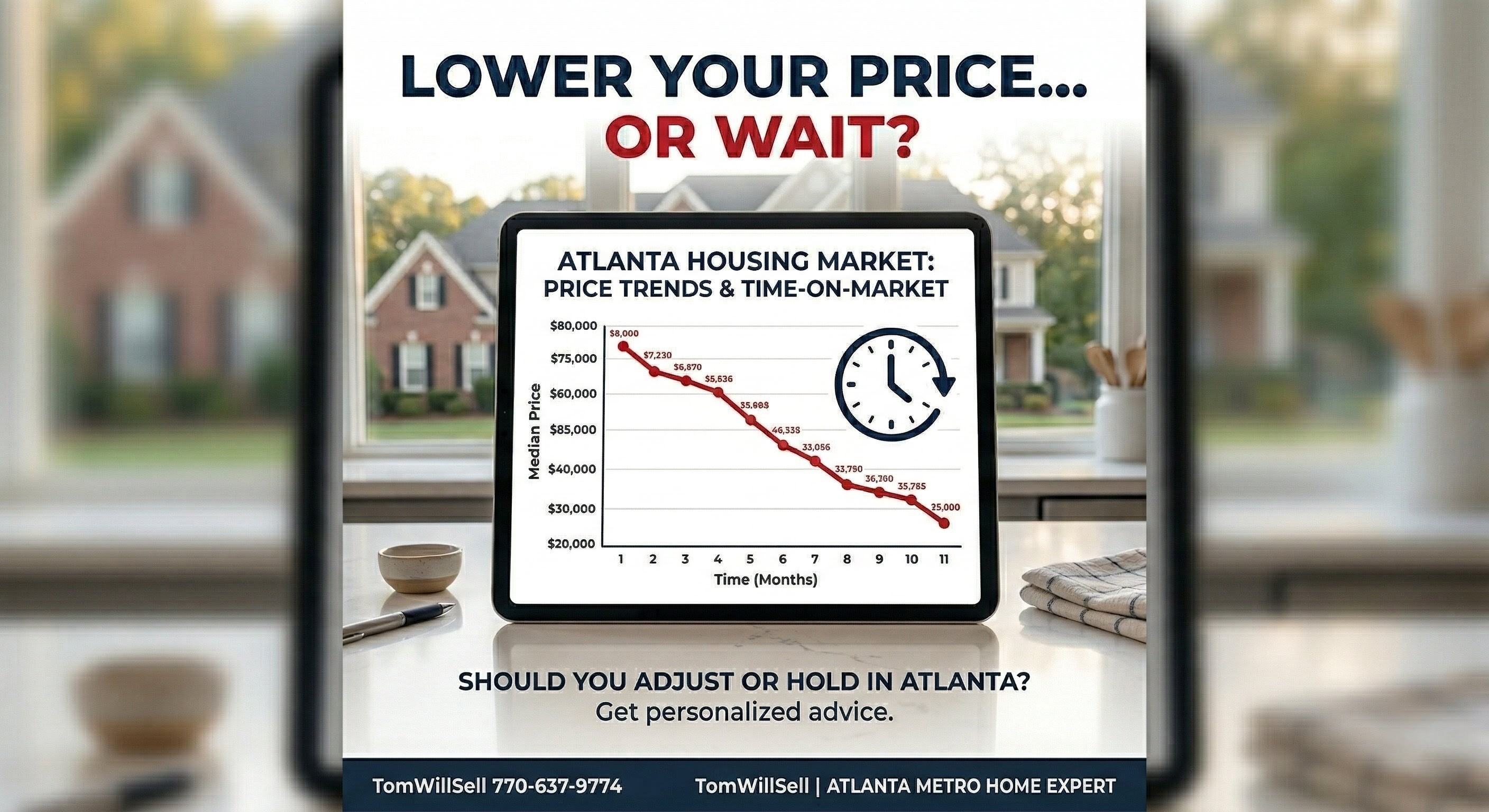
Your home has been on the market for six weeks in Metro Atlanta, and the silence feels deafening. No offers have arrived, showings have slowed to a trickle, and that nagging question keeps surfacing - should you drop your asking price or give it more time? This emotional crossroads hits every seller differently, especially when you feel attached to a number that represents years of memories and financial investment. The truth is, waiting only makes sense when market conditions are shifting in your favor, and right now, that's not guaranteed across all Atlanta neighborhoods. This article will guide you through making this crucial decision using real market signals rather than wishful thinking or guesswork. You'll learn to read the specific factors that matter most in our local market - how many days your home has been listed compared to others, what your direct competition is doing with their prices, current buyer demand in your area, how mortgage rates are affecting purchasing power, and which neighborhood trends are working for or against you. These concrete indicators will help you make a confident choice that reduces stress and prevents your listing from growing stale. Instead of wondering whether you're making the right move, you'll have the clarity to act decisively based on what's actually happening in Atlanta's real estate market right now.
The short answer most Atlanta sellers need first
Most Metro Atlanta properties that have lingered on the market without generating genuine buyer interest benefit more from strategic price adjustments than extended waiting periods. The local real estate environment has become increasingly selective, with prospective purchasers carefully evaluating multiple options before committing and rejecting properties they perceive as overpriced. This shift reflects a more cautious buyer mentality where thorough comparison shopping has become the norm rather than the exception.
Current market data reveals three critical indicators that support this approach:
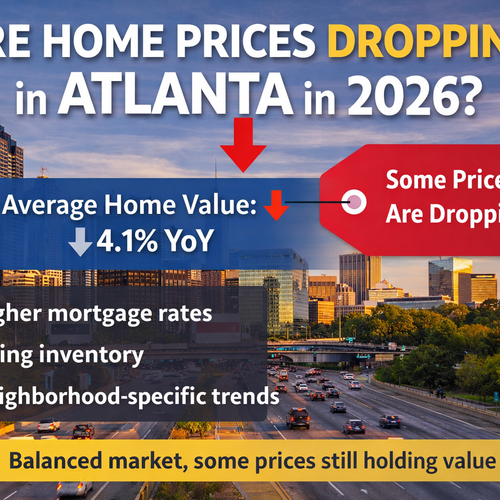
- Property values have declined 4.0% compared to last year - This downward trend signals that buyers have more negotiating power and expect pricing to reflect current conditions rather than past peak values
- Homes typically require 73 days to reach pending status - This extended timeline means properties priced correctly from the start have a significant advantage over those waiting for market conditions to improve
- Just 15.8% of homes sell above their listing price - The days of bidding wars and premium offers have largely ended, making accurate initial pricing more crucial than ever
Holding firm on price can still prove effective in specific neighborhoods where buyer demand remains strong and initial pricing already reflects realistic market expectations. Properties in these areas often benefit from limited inventory and continued buyer competition. Making the right choice requires careful analysis of your specific property's condition, location desirability, current competition, and how long your home has already been available. Each situation presents unique factors that influence whether patience or price modification will yield better results, but accurate pricing from day one remains the clearest path to success.
When waiting can still be the right move
Certain Metro Atlanta neighborhoods continue to defy broader market trends, creating pockets where patience remains a viable strategy for sellers who have positioned their properties correctly from the start.
Where waiting makes sense
Maintaining your current asking price becomes a reasonable approach when your property has recently entered the market with competitive pricing in neighborhoods like Buckhead, Sandy Springs, Brookhaven, Dunwoody, or Tucker. These areas continue to attract buyers because of their established school districts, convenient access to major employment centers, and the ongoing scarcity of available inventory. Real estate professionals note that "Atlanta's core neighborhoods continuing to perform well, especially in Buckhead, Sandy Springs, and Brookhaven, where location, schools, and lifestyle remain strong demand drivers." Properties that have been available for fewer than 50 days retain flexibility to maintain their pricing, particularly when they present in move-in condition and offer clear advantages over nearby competing listings. The combination of desirable location, proper initial pricing, and quality presentation creates circumstances where holding steady can yield better results than immediate price reductions.
What signals justify staying patient
Strong foot traffic through your property, coupled with enthusiastic comments from potential buyers, indicates that your pricing strategy may simply need more time to connect with the right purchaser. When visitors spend extended periods examining your home's features, request second showings, or engage in detailed discussions about neighborhood amenities, these behaviors suggest genuine interest that could translate into offers. Conversations that progress beyond casual browsing to specific questions about closing timelines, included appliances, or minor repair items often signal buyers who are seriously considering making an offer. However, maintaining your price requires active monitoring rather than passive hope - tracking when new properties enter your competition pool, observing how recently listed homes price themselves relative to yours, and measuring whether showing frequency remains consistent week over week. This vigilant approach allows you to spot shifts in buyer behavior or market dynamics before they significantly impact your property's appeal.
Evaluating these market signals demands honest assessment of feedback patterns and competitive positioning rather than emotional attachment to a specific number. Successful patience requires sellers to remain engaged with their listing's performance metrics and responsive to changing conditions in their immediate area.
The warning signs that your price is now the problem
Recognizing when your asking price has shifted from reasonable to problematic requires careful attention to specific market signals that indicate buyer resistance. While patience can work under certain conditions, several clear indicators reveal when your property's price tag has become the primary barrier to generating interest and securing offers.
- Your property receives fewer than three showings per week or experiences a noticeable drop in appointment requests. This decline often happens gradually, making it easy to miss until you compare current activity to your first few weeks on the market. Real estate agents typically expect consistent showing volume when properties are priced appropriately for their condition and location. When foot traffic slows significantly, especially during peak buying seasons or weekends, this suggests potential buyers are scrolling past your listing in favor of better-priced alternatives. Tracking your showing numbers week by week provides concrete evidence of whether your price point aligns with buyer expectations.
- Agent feedback consistently mentions that your home seems expensive relative to recent sales or current competition. These comments might come phrased diplomatically, but phrases like "beautiful home, but the price feels high" or "clients love the property but are concerned about value" signal a clear pattern. Professional agents understand local market conditions and buyer psychology, so when multiple representatives express similar concerns, this feedback reflects genuine market sentiment rather than isolated opinions. Buyers often compare your property to three or four similar homes before making decisions, and repeated price-related comments indicate your listing falls outside their acceptable range.
- Zero purchase offers have materialized despite your home being move-in ready and competitively staged. Well-maintained properties in desirable areas typically generate at least one offer within the first month when priced correctly. The absence of any offers, even lowball attempts, suggests buyers view your asking price as unrealistic enough to avoid engagement entirely. This silence becomes particularly telling when neighboring properties with similar features receive multiple offers or sell quickly at lower price points.
- Your listing has exceeded the typical market absorption period of 50 to 75 days and shows declining online engagement. Properties that linger beyond this timeframe often develop a "stale" reputation among buyers and agents who assume something must be wrong with the home or its pricing. Online listing views, saved searches, and social media shares typically decrease as properties age on the market, creating a downward spiral of reduced visibility.
- Potential buyers begin asking pointed questions about why your home remains available or whether you're motivated to negotiate. These inquiries reflect a shift in buyer perception from viewing your property as desirable to questioning its market positioning. When visitors spend time investigating your listing history or days on market rather than focusing on your home's features, this indicates price skepticism has overshadowed property appeal.
These warning signs carry extra weight in Atlanta's current market environment, where "factors such as days on market and share of listings with a price cut suggests less competition" according to recent market analysis. Higher mortgage rates have reduced buyer purchasing power, making price sensitivity more acute than in previous years. Buyers now hold more negotiating leverage and can afford to be selective, walking away from properties they perceive as overpriced rather than stretching their budgets.
Adjusting a $400,000 home that has sat for 60-plus days by reducing the price 3 to 5 percent - bringing it to $380,000 or $388,000 - often generates renewed interest from buyers who previously dismissed it as outside their range. This repositioning can trigger fresh online algorithm exposure, attract new showing requests, and signal to the market that you're serious about selling rather than testing price limits.
What the Atlanta numbers are really telling sellers right now
Raw market statistics often confuse more than they clarify, but Metro Atlanta's current data tells a straightforward story about buyer behavior and pricing expectations. These figures translate into practical guidance for homeowners who need to understand their position without getting lost in complex market analysis. The numbers reveal how purchasing patterns have shifted and what this means for your specific situation.
How inventory changes affect your competition
Metro Atlanta now holds approximately 4,050 homes available for purchase, representing a substantial increase from recent years when buyers competed fiercely for limited options. This expanded selection fundamentally alters the buying experience, allowing purchasers to compare multiple properties thoroughly before making decisions. Rather than rushing to secure any available home, buyers now take time to evaluate neighborhoods, features, and value propositions across numerous listings. Total sales activity has decreased significantly, but this doesn't indicate a completely stalled market. Instead, it reflects a more deliberate purchasing approach where buyers research extensively, visit multiple properties, and negotiate more carefully than during previous high-pressure periods.
What sale prices reveal about current expectations
The current sale-to-list ratio of 0.979 demonstrates that most Atlanta homes close below their original asking prices, with sellers typically accepting offers that fall short of their initial expectations. This metric shows that successful transactions happen when properties are positioned realistically from their first day on the market. Additionally, 68.0% of sales close under the original list price, reinforcing that buyers expect room for negotiation in their offers. Approximately 16.7% of all active listings have already implemented price reductions, indicating that adjustments have become a standard part of the selling process rather than an emergency measure. These modifications often occur after sellers recognize that their initial pricing didn't align with buyer willingness to pay, and early adjustments typically generate better results than prolonged market exposure at unrealistic levels.
Getting your initial price right from the beginning carries more weight now than it did during faster-moving market conditions. Properties that launch with competitive pricing based on recent comparable sales and current buyer capacity tend to attract serious interest quickly, while those testing higher price points often struggle to regain momentum even after later reductions. This balanced market rewards sellers who research thoroughly and price strategically rather than those who hope for premium offers or expect buyers to stretch beyond comfortable payment ranges.
Your nearby competition matters more than your original list price
Forget the number you wrote on your listing contract six weeks ago - the only figure that matters now is how your home stacks up against every other property buyers can visit this weekend. Your asking price exists in a vacuum until potential purchasers start comparing it to similar homes they can tour, research online, and potentially purchase instead of yours.
Understanding your position requires examining five specific factors that influence every buyer's decision-making process:
- Currently available homes in your immediate area - Scroll through listings within a half-mile radius of your property to see what buyers encounter when they search your neighborhood. Count how many homes share your square footage range, bedroom count, and general condition level. Note which properties offer better value propositions through lower prices, superior staging, or additional features. Buyers typically narrow their search to three or four serious contenders, and your home needs to earn a spot on that shortlist by offering clear advantages over alternatives.
- Recent sales within your subdivision or comparable neighborhoods - Pull up the last six months of closed transactions for homes similar to yours in size, age, and condition. These completed sales reveal what buyers actually paid rather than what sellers hoped to receive. Pay attention to how long these properties spent on the market before going under contract and whether they closed above or below their final listing prices. "Homes that are properly prepared and realistically priced continue to sell well" while those that ignore recent transaction data struggle to generate interest.
- Average marketing time for properties like yours - Track how long similar homes have been available before receiving offers or making price adjustments. Properties that have been available for more than the typical "50 to 75 days" often signal to buyers that something might be wrong with the price or condition. Buyers develop skepticism about homes that linger significantly longer than others in the same category, viewing extended availability as a red flag rather than an opportunity.
- Price modifications happening around you - Monitor which nearby properties have reduced their asking prices and by how much. "Homes that chase last year's prices tend to sit, accumulate days on market, and eventually require reductions" according to local market analysis. When multiple homes in your area implement price cuts, this creates downward pressure on all remaining listings as buyers begin expecting similar adjustments from every seller.
- Physical condition and move-in readiness compared to alternatives - Assess whether your home requires updating, repairs, or cosmetic improvements that competing properties have already addressed. Buyers increasingly favor homes that allow them to move in without immediate renovation projects, especially given current financing costs and contractor availability concerns. Fresh paint, updated fixtures, and well-maintained systems provide significant advantages over properties that need work, even when those other homes carry lower price tags.
Buyers spend hours browsing online listings before scheduling tours, creating mental spreadsheets that rank properties by value, location, and condition. They eliminate homes that seem expensive relative to alternatives before ever stepping inside, making first impressions through photos and pricing crucial for generating showing requests. Move-in-ready properties command premium attention because renovation financing has become more complex and expensive, leading buyers to prefer homes that require minimal additional investment.
Neighborhood dynamics can shift rapidly when new inventory appears or when several properties adjust their pricing strategies simultaneously. "The difference between two streets, two school clusters, or two similar-looking homes can mean tens of thousands of dollars" in final sale prices, making hyperlocal analysis essential rather than relying on broad metropolitan trends that may not reflect your specific area's conditions.
A simple decision check before you cut or hold
Transforming this choice from an emotional struggle into a methodical evaluation requires examining three fundamental aspects of your situation without the weight of personal attachment clouding your judgment. Rather than wrestling with feelings about what your home should be worth, focus on concrete indicators that reveal how the market perceives your property right now.
Check your current listing performance
Measuring your home's market reception starts with tracking appointment frequency and visitor engagement over the past four weeks compared to your initial launch period. Properties generating fewer than two showings weekly after their first month typically signal disconnect between asking price and buyer expectations, especially when similar homes continue attracting steady traffic. Converting interest into written offers represents the ultimate test of market acceptance - homes priced appropriately for current conditions usually receive at least one purchase attempt within 45 days of listing. Weak showing activity combined with zero offers indicates buyers are eliminating your property during their online research phase before scheduling visits, suggesting your price point exceeds their comfort zone for your neighborhood and home type.
Compare your home to what buyers can choose instead
Evaluating your competitive position requires examining recently listed properties within your immediate area that offer similar square footage, bedroom counts, and condition levels. Buyers typically research five to seven options before narrowing their focus, making your home's value proposition critical for earning serious consideration. When multiple nearby properties provide better pricing or superior features, your listing faces an uphill battle regardless of its individual merits. "The overall Atlanta market is still leaning toward sellers below $600K" while higher price segments experience different dynamics, making your specific price range crucial for understanding buyer behavior. Neighborhood demand strength becomes apparent through absorption rates - areas where similar homes sell within 30 to 60 days demonstrate healthy buyer interest, while locations requiring 90-plus days suggest limited purchasing activity that may not improve soon.
Factor in rates and affordability before deciding
Current mortgage rates directly impact how much home buyers can afford, creating a ceiling effect that eliminates properties priced beyond comfortable monthly payment ranges. "Pricing power is shifting toward buyers" as financing costs reduce purchasing capacity, making previously acceptable price points now feel expensive to the same demographic. Buyers take longer to commit when monthly payments stretch their budgets, leading to extended decision periods that favor competitively priced homes over those requiring financial stretching. Well-maintained properties in desirable locations still struggle to generate offers when their pricing assumes buyer willingness to maximize debt-to-income ratios that may have worked during lower rate periods.
Determining your next move becomes clearer when these three factors align in the same direction. Properties experiencing minimal showing activity, facing strong nearby competition, and priced above current affordability comfort zones benefit from prompt adjustments that can restore market interest before accumulating additional marketing time. Homes receiving consistent visitor traffic, positioned competitively within their immediate area, and located in submarkets with continued buyer engagement can reasonably maintain current pricing for several more weeks. Obtaining a professional pricing analysis removes guesswork from this decision by providing objective data about your home's position relative to current market realities rather than past expectations or emotional attachments.
Final Thoughts
The decision between lowering your price or waiting longer in Metro Atlanta's market comes down to one simple truth — waiting only works when the market is helping you, and right now that's not guaranteed. We've walked through the practical signals that matter most — days on market, nearby competition, showing activity, and neighborhood demand. These factors tell the real story about where your home stands.
An overpriced home loses attention fast and becomes harder to sell the longer it sits. Buyers move on, agents stop showing it, and your listing grows stale. The stress builds while your options shrink. This information gives you the power to make smart pricing decisions without guessing. You can now spot when waiting might help versus when it will hurt your chances.
Understanding these Metro Atlanta market factors reduces the emotional weight of selling. You're not flying blind anymore. You know what signs to watch for and when action beats patience. This clarity helps you attract serious buyers instead of hoping the right offer will eventually appear.
The right pricing decision can reduce stress, attract serious buyers, and help you move forward with more clarity. Rather than wondering if you're making the right choice, you can feel confident about your next step.
Ready to get specific about your home's value? Request a home value review or pricing strategy consultation. Get the local pricing advice that fits your neighborhood and timeline. Your home deserves a strategy that works, not wishful thinking.
Check out this article next